Custom Countertops in Hendersonville: Granite, Quartz or Quartzite Under Heat and Stains
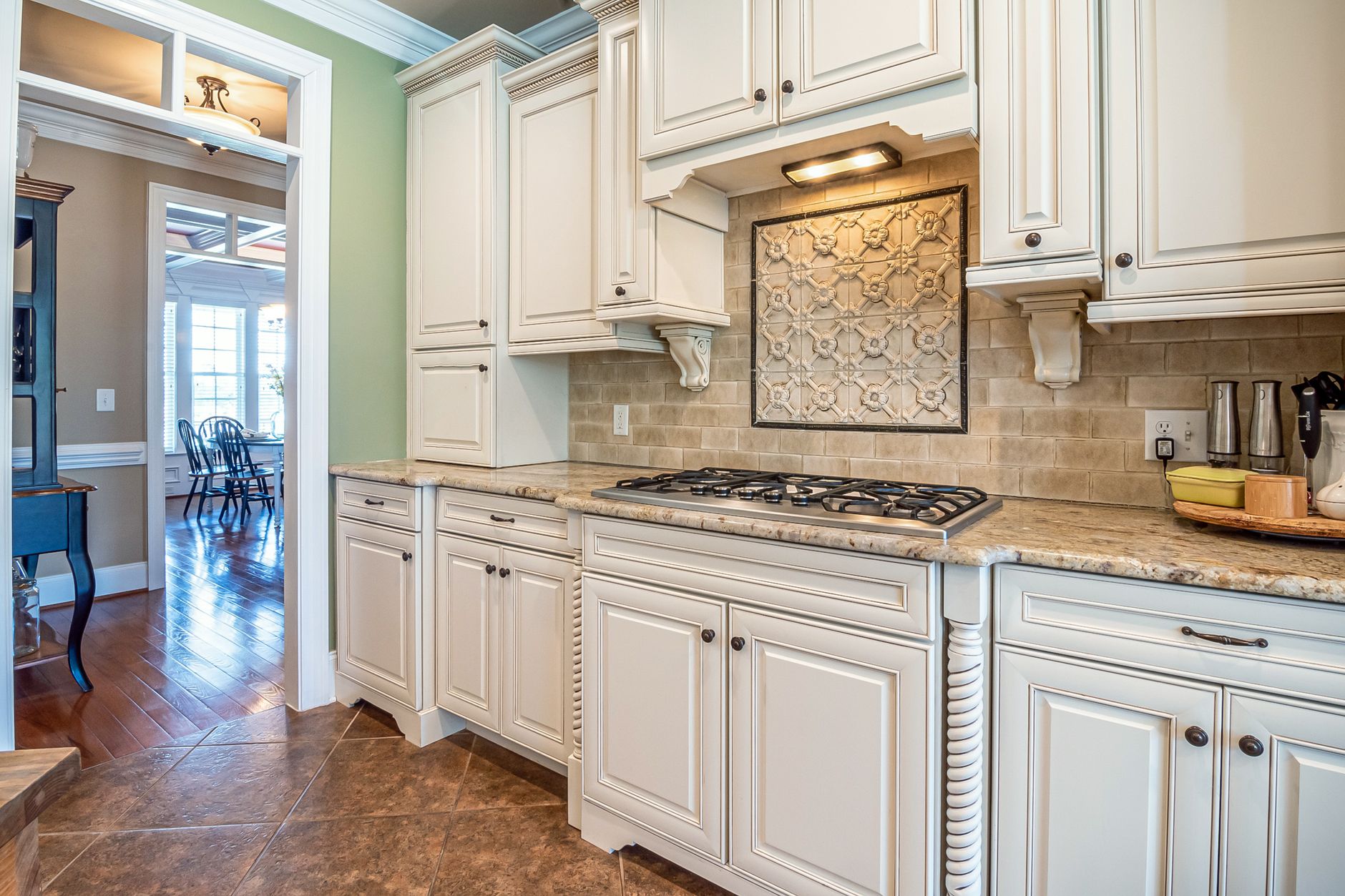
A hot pan, a splash of lemon, and hard afternoon light do not treat every stone the same way in a Hendersonville kitchen. Granite, quartz and quartzite each hold up to heat, stains and daily cooking on different terms, and none of them suits every house.
Heat From the Stove
A skillet just off the burner still carries heat, and so does a sheet pan from the oven. Where that pan lands matters more than the name printed on the slab.
Granite under a hot pan
Granite is natural stone, and each slab is different. It resists heat well. A hot pan set down briefly is far less likely to mark granite than to mark a surface bound with resin. A trivet remains the better habit, mostly because it keeps metal from scratching a polish. Sealing is a separate job. Granite should be sealed periodically, and the interval depends on that stone, not on a single rule for every slab.
Lighter granites tend to be more porous than dark ones, though this varies by slab. A pale stone that takes water will take oil more readily beside the stove. Darker stone is not sealed for life either. If water darkens the surface within a few minutes, it is time to seal.
Quartz and the resin
Quartz countertops are engineered from crushed quartz and resin. The mineral is hard. The resin binds it, and high heat can damage that resin. Quartz is not heat proof. A pan off the range or a slow cooker left on the stone can scorch or discolor the binder. Always use trivets for hot pans on quartz.
The same resin is why quartz does not need sealing and why it resists stains well. Oil and coffee sit on top. Wipe them and the spot is usually gone. Heat is the limit, not stain resistance.
Quartzite beside the burner
Quartzite is natural stone made from sandstone. It is hard, and many slabs look like marble, which can suit a mountain cabin or a newer kitchen facing the ridge. A brief hot pan is less of a threat on quartzite than on quartz. Quartzite still needs sealing. The marble look does not mean the stone can be ignored.
Some stone sold as quartzite is actually softer marble or dolomite. A scratch test on a sample helps tell them apart. A glass edge or steel that marks the sample means the stone may etch and scratch more like marble than like true quartzite. Test before fabrication, not after the slab is cut.
Stains, Acids and Mountain Light
What stays on the stone after cooking is the next test. Hendersonville sits in an apple growing county, and canning season puts vinegar, lemon and tomato on the counter in real quantity.
Oil, coffee and a tired seal
Granite can stain if the surface is open. It is not stain proof. Coffee, oil or a dark sauce on a worn seal can leave a dark patch that does not wipe away. A few drops of water tell you if sealing is due: if the stone darkens within a few minutes, water is getting in. If the water beads and the color stays even, the seal is still working.
Quartz resists those stains because the resin closes the surface. No sealer is required. Coffee left out and oil near the range usually wipe clean. The limits remain heat and, in some rooms, sunlight.
Quartzite follows granite on stains. A sound seal keeps oil and coffee on top. After the seal wears, they can enter. A pale marble-like face shows a light mark more clearly than a busy granite pattern, so wiping still matters on a sealed slab.
Acids in canning season
Marble and other soft stones etch from acids such as lemon, vinegar and tomato. An etch is a dull spot in the polish, not a stain that soaked in. Canning brings cider vinegar, lemon and tomato sauce onto the same boards and counters. On true granite and true quartzite, a sealed surface handles those acids better than marble does. On a soft stone sold as quartzite, the same splash can leave a pale ring.
Quartz does not etch from those acids the way marble does. Lemon and vinegar are not its weak point. A cook who preps acidic food often, and who also sets hot pans down bare, is testing two different limits. One material will not cover both.
South windows toward the ridge
Quartz can discolor in strong direct sunlight over time. That matters in a sunroom or in a kitchen with big south windows looking toward the mountains. Hendersonville sits in the Blue Ridge, and a south elevation can throw hard light across a counter for hours. Granite and quartzite do not carry the resin that shifts in that light. If the main run faces the glass, natural stone avoids a problem quartz can develop. A short sunny return is a smaller risk. Set a sample in the real light before choosing.
The Rest of a Cooking Day
Edges, seams, sinks and the cabinets under them decide whether a good slab still looks sound after years of daily use.
Edges, seams and the sink
A slightly rounded or eased edge chips less than a sharp square edge. Where heavy pots move from stove to counter all week, that small radius matters. All three materials can take an eased edge. The profile is a fabrication choice, not a trait of the mineral.
Seams are visible in all materials. Ask where they will fall and how color will be matched. A seam through the main prep zone shows every mismatch, while one near a corner or the sink is easier to live with. Natural stone varies inside a bundle, so match depends on which part of which slab is cut. Quartz is more consistent from piece to piece, but the joint still shows. No layout makes a seam invisible.
Undermount sinks need a strong material and good support. Granite, quartz and quartzite can all do it with proper fabrication. Support under the bowl and a cabinet that does not flex matter as much as the stone name. Look at the full slab before fabrication. Veins, pits and fissures are part of natural stone, and placement decides whether they sit in the prep zone or on a quiet return. Quartz does not carry natural fissures, and its made pattern helps when two runs must agree.
Cabinets, overhangs and daily habits
Older homes and mountain cabins around Hendersonville may have cabinets that are out of level. Heavy slabs need level, solid cabinets. Stone will not pull a twisted box square. It will bridge the twist until something cracks, or it will rock and open a joint. Shim and fasten the boxes before any of the three materials is set.
Overhangs for seating may need support brackets depending on depth and material. A bar where people lean is a real load. Brackets keep the span from stressing a cutout or a seam. A harder stone does not skip that support.
Cutting boards protect both the countertop and the knives on every surface. Chopping on any of the three dulls the blade and can scratch a polish. Clean with mild dish soap and water, and avoid harsh acidic or abrasive cleaners. Wipe oil on natural stone when it lands. Move heat onto a trivet on quartz.
Test a sample before you choose
Ask for a sample to take home and test with oil, coffee and lemon before choosing. Leave oil overnight, a little coffee, and a touch of lemon rinsed after a short wait. On quartz those marks should wipe clean, so the real question is whether a trivet will meet every hot pan. On granite and quartzite the test shows whether the seal holds and whether lemon dulls the face. If a sample sold as quartzite etches, question the stone before it is cut.
Sealing natural stone is easy, but it must be remembered. The water drop test tells you when. Quartz trades that task for trivets and for an honest look at sun on the slab. Forgetting either task is how a sound counter starts to look tired.
No one material is best for every Hendersonville kitchen. Hot pans set down in a hurry stress quartz more than granite or quartzite. Oil, coffee and a wish to skip sealing point toward quartz, if south light is part of the choice. A marble look calls for confirmed quartzite, a seal, and acids that do not sit. The surface that holds up is the one whose limits match how that kitchen is used.