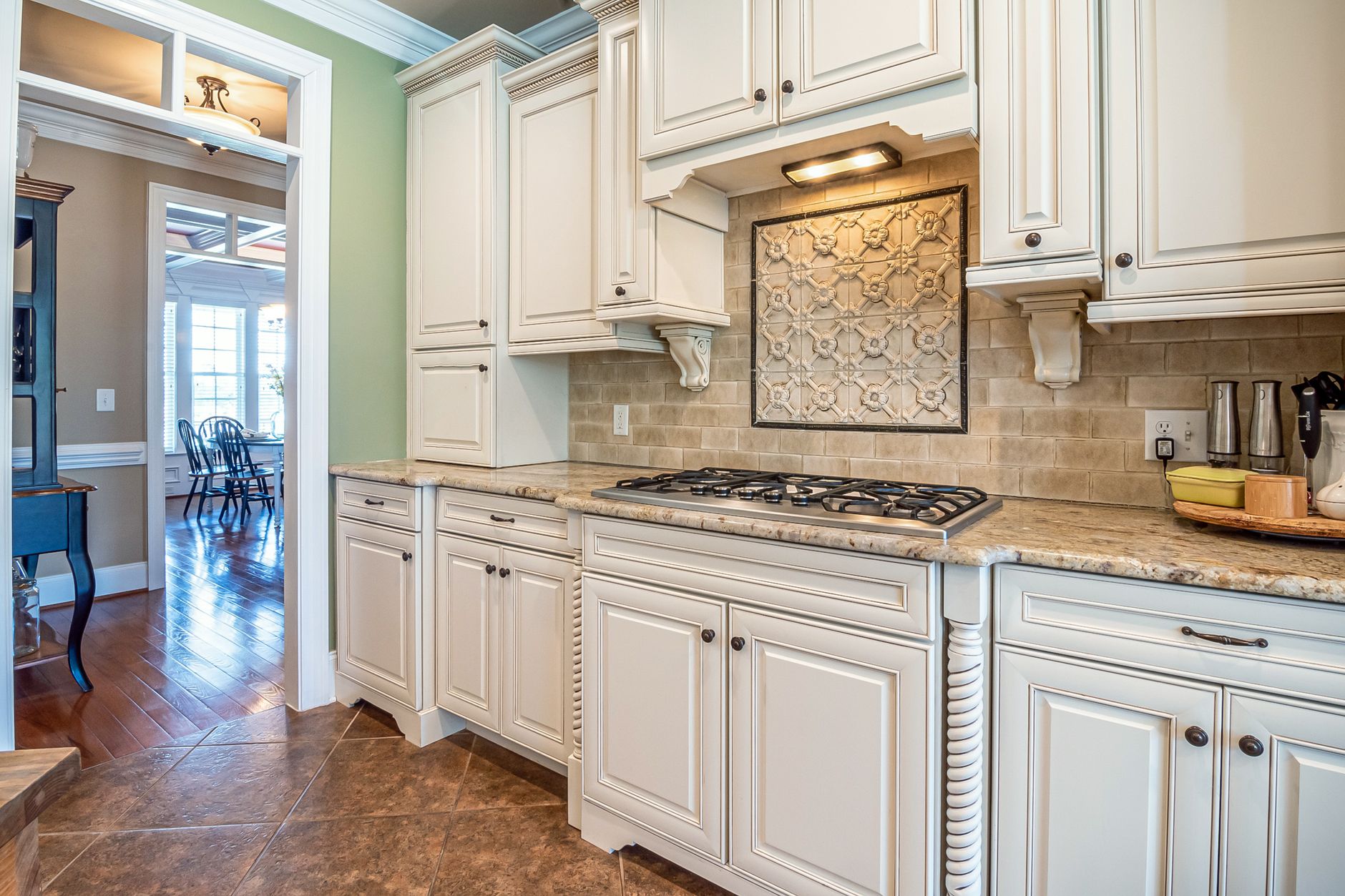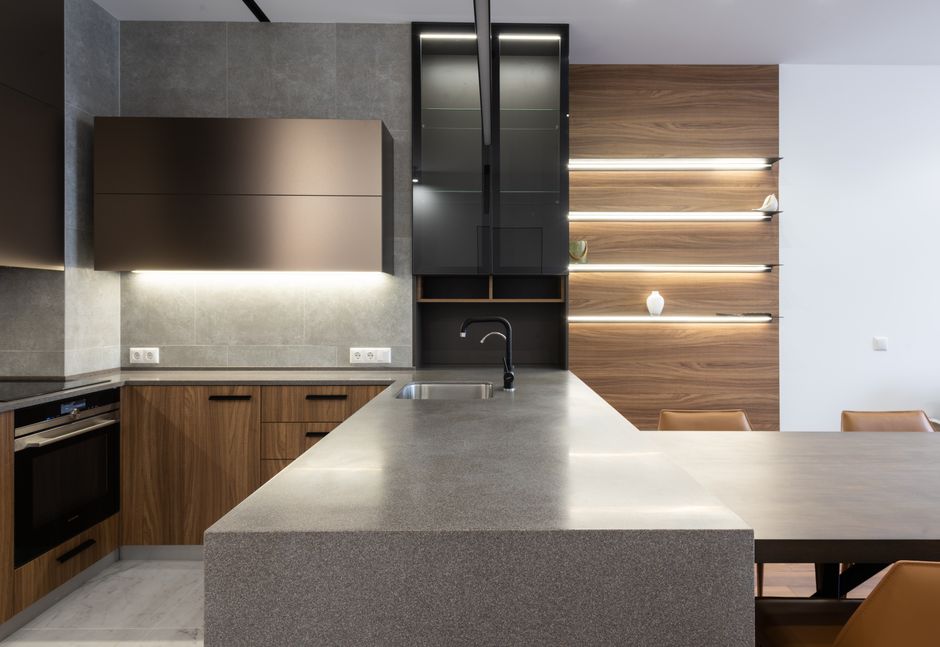
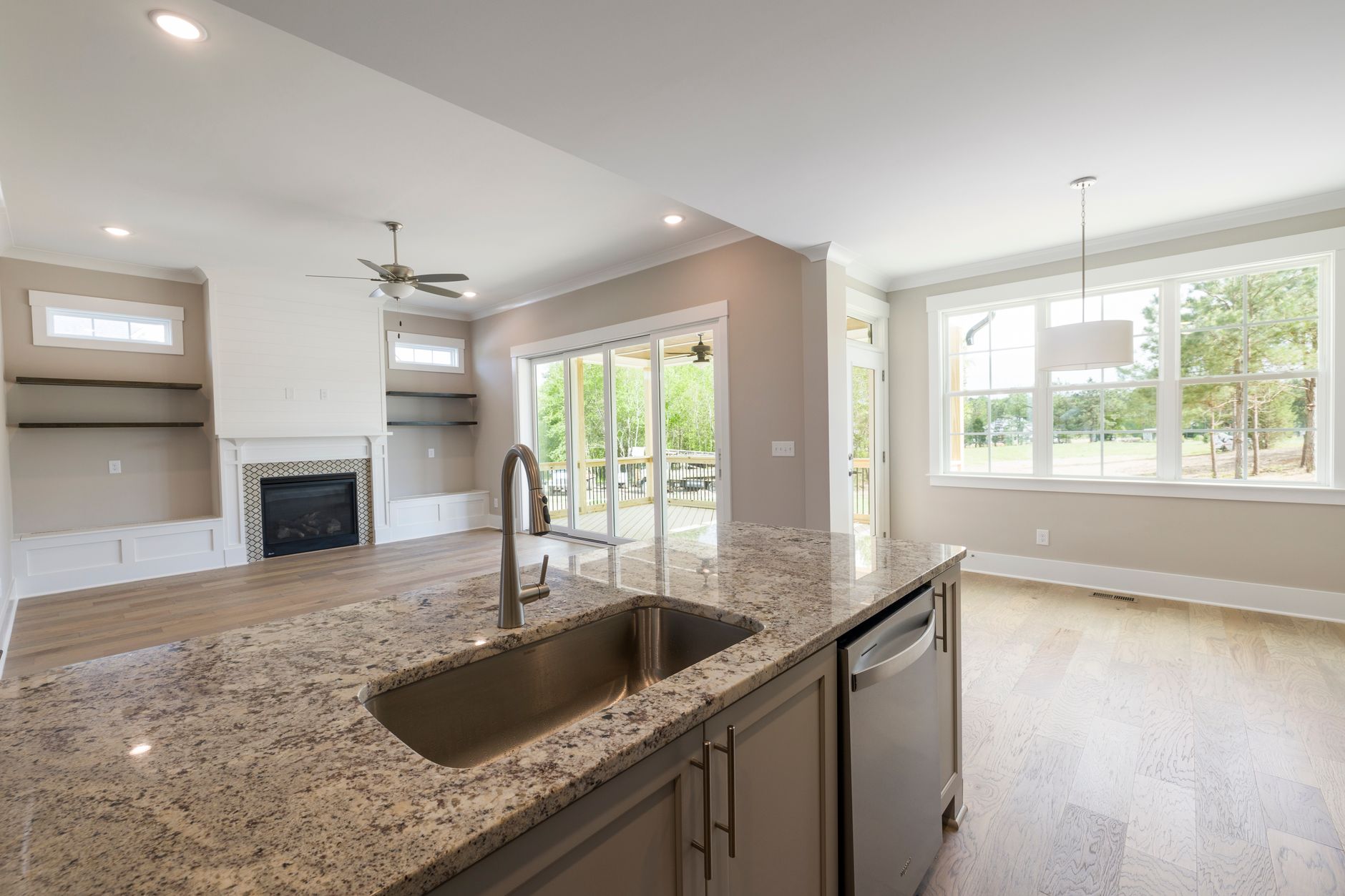
Granite takes heat better than quartz, quartz resists stains without a sealer, and quartzite stays in the natural stone camp: hard, often marble looking, and still in need of sealer. In a Hendersonville kitchen that cooks every day, the useful question is not which stone looks best under bright lights. It is how each surface handles heat, stains and the mess that comes with real meals.
Hendersonville sits in Henderson County, in the western North Carolina mountains. Fall brings canning season in an apple growing county, so lemon, vinegar, tomato and fruit juice can sit on the counter for hours. Older homes and mountain cabins add a second constraint. Cabinets may not be perfectly level, and a heavy slab will show every dip.
None of the three materials is best for every kitchen. Each one handles one kind of daily use well and asks for care on another.
How Heat Treats Each Material
Granite is natural stone, and each slab is different. It resists heat well. A pan that left the burner a moment too soon is less likely to mark granite than a surface bound with resin. That resistance is not a reason to skip a trivet on every hot pot. A cutting board still belongs under the knife.
Quartz countertops are engineered from crushed quartz and resin. The mineral is hard. The resin is the part that high heat can damage. A hot skillet set straight down on quartz can discolor or scar the binder even when the quartz grains are fine. Always use trivets for hot pans on quartz. Quartz is not heat proof. It is a strong everyday surface that fails in a specific way if the trivet gets skipped.
Quartzite is natural stone made from sandstone. It is hard, and it often looks like marble, with soft veins rather than a repeating pattern. Heat behavior on true quartzite sits closer to other natural stone than to resin-bound quartz. The important word is true. Some stone sold as quartzite is actually softer marble or dolomite. Those softer stones do not hold up the way the name suggests. A scratch test on a sample, with a glass edge or a piece of steel, can help tell them apart before the slab is cut.
If the kitchen runs a lot of high-heat cooking, granite and verified quartzite leave more room for a mistake than quartz. Quartz still fits a house where a trivet is already the habit.
Stains, Acids and a Long Canning Day
Quartz does not need sealing, and it resists stains well. Oil, coffee and ordinary spills sit on the surface instead of soaking in. Wipe it with mild dish soap and water. The same resin that cannot take a hot pan is what keeps most household stains from sinking in.
Granite is not stain proof. It resists heat well, but it should be sealed periodically depending on the stone. Lighter granites tend to be more porous than dark ones, though this varies by slab. A light, open granite that sees olive oil and coffee every morning will show neglect sooner than a tight, dark slab. The water drop test shows whether natural stone needs sealing. If water darkens the stone within a few minutes, it is time to seal.
Quartzite still needs sealing. A marble look can tempt you to treat it like a low-care engineered top. It is not that. Unsealed quartzite can take a stain the way other natural stone can. Sealing natural stone is easy, but it must be remembered.
Acids are a different problem from stains. Marble and soft stones etch from acids such as lemon, vinegar and tomato. An etch is a dull spot in the polish, not a mark you wipe off. Canning season in an apple growing county brings plenty of acidic prep. If a slab marketed as quartzite fails a scratch test and turns out to be marble or dolomite, lemon juice and tomato sauce become a real risk to the finish. True quartzite is harder and less prone to that etch. You only get that benefit if the stone is what the label says.
Ask for a sample to take home and test with oil, coffee and lemon before choosing. Leave them on the piece and watch what beads, what darkens, and what dulls the polish.
Sun on a South Window
Quartz can discolor in strong direct sunlight over time. That is worth considering in a sunroom, or in a kitchen with big south windows looking toward the mountains. A long run of quartz in that kind of light for years is a different decision than the same quartz on an interior wall.
Granite and quartzite do not carry that resin risk. Their color sits in the mineral, not in a binder that can shift under strong sun. If the counter you use most sits in a bright south bay, natural stone removes one variable that quartz still has.
Daily Habits on All Three
Cutting boards protect both the countertop and the knives on every surface. Granite, quartz and quartzite will all dull a blade if you cut straight on them. A sharp knife on a hard top is also how small chips start. The board is the habit that keeps the surface and the tools in the same condition after a year of meals.
Clean with mild dish soap and water. Avoid harsh acidic or abrasive cleaners on stone. A powder scrubber can haze a polish a cloth will not bring back. Vinegar as a daily cleaner is a poor match for natural stone, especially anything that etches. Soap and water handle fruit juice, a little oil, and most of what a cooking day leaves behind.
Seams are visible in all materials. Ask where seams will fall and how color will be matched. On granite and quartzite, vein direction across a seam is part of the look. On quartz, pattern and color batch matter more. A seam in the middle of the main prep zone sits under your hands every night. No layout makes a seam invisible.
Look at the full slab before fabrication. Veins, pits and fissures are part of natural stone, and placement decides the look. A fissure is how the stone formed, not a crack from a bad install. Where that mark sits, over the sink, through the main work area, or off to the side, is a choice you only get if you see the whole slab.
Edges, Sinks and Level Cabinets
Edge profiles affect chipping. A slightly rounded or eased edge chips less than a sharp square edge. This holds for granite, quartz and quartzite alike.
Undermount sinks need a strong material and good support. All three can do it with proper fabrication. The sink cutout removes stone and puts stress at the corners of the opening. Support under the sink, and a clean finished cut, matter more than which name you chose. A weak cabinet or a poorly supported opening will show trouble in any of them.
Older homes and mountain cabins may have cabinets that are out of level. Heavy slabs need level, solid cabinets. A stone top does not flex to hide a dip. If a base cabinet rocks, or if a run has settled, correct that before the slab goes down. Otherwise a seam opens, or the stone sits in a twist it was not cut to carry.
Overhangs for seating may need support brackets depending on depth and material. A breakfast bar that extends past the cabinet is a common layout. Once the overhang gets deep, the bracket is not optional. Ask before the template is cut, not after the stone is in the house.
The Upkeep You Will Remember
Think about how much maintenance you want. Sealing granite and quartzite is easy, but it must be remembered. The water drop test tells you when.
Take the sample home. Oil, coffee and lemon on the actual piece will show porosity, etch risk, and whether the color hides a spill or announces it. Do that in the light your counter will live in.
Pick granite or verified quartzite if a hot pan is the mistake you are likely to make. Pick quartz if stains and sealing are the chores you would rather skip, and keep it out of strong direct sun. Test the sample, check the cabinets, and do not trust a quartzite label you have not scratched.